
Pacific Northwest Tourism Outlook 2026:
Why Restaurants Should Be Paying Attention to Hotel Guests Relations and Referrals Again,
Not Algorithms

photo: https://curtiswrightmaps.com
Summer Hotel Demand, Business Travel, and Visitor Spending Continue to Create Opportunities for Restaurants Across Seattle, Portland, Central Oregon, Boise, and Napa Valley
By Where To Eat Guide Research & Insights
While much of the national conversation over the past year has focused on inflation, labor challenges, and shifting consumer spending habits, another story has been quietly unfolding across the Pacific Northwest and Northern California.
Travelers are still traveling.
Hotels are still filling rooms.
Business travel continues its recovery.
And visitors continue to spend billions of dollars annually on dining, entertainment, and local experiences.
For restaurant operators, these trends matter because tourism remains one of the few economic sectors that consistently brings entirely new customers into the market every day.
Unlike local consumers who may dine out once or twice a week, travelers make multiple dining decisions throughout their stay. They arrive without established routines, without favorite restaurants, and often without local knowledge. As a result, they rely heavily on recommendations, destination resources, hotel staff, visitor centers, and trusted local guidance to decide where to eat.
Across Seattle, Portland, Central Oregon, Boise, and Napa Valley, the data suggests tourism demand remains healthy heading into 2026. More importantly, it suggests that restaurants that position themselves within the visitor decision journey will be best positioned to capture that demand.
Seattle's Tourism Economy Has Moved Beyond Recovery
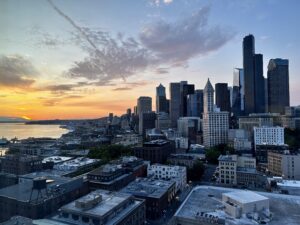
For much of the past five years, the conversation surrounding Seattle tourism focused on recovery. In 2025, that conversation began to change.
According to the Downtown Seattle Association, more than 3.2 million people visited downtown Seattle during August alone, bringing activity levels to approximately 99 percent of August 2019 visitation. During that same month, Seattle hotels sold more than 404,000 room nights, a powerful indicator that both leisure and business travel have returned in meaningful ways.
Those figures represent more than healthy hotel performance. They represent hundreds of thousands of travelers arriving in the city and making spending decisions throughout their stay.
Using average hotel occupancy patterns, those 404,000 occupied room nights likely translated into more than 800,000 overnight visitors during a single month. For restaurants, that means hundreds of thousands of people waking up without a kitchen and looking for breakfast, lunch, dinner, coffee, cocktails, and local recommendations.
Seattle's cruise industry is further amplifying this demand.
Nearly 2 million cruise passengers moved through Seattle during the 2025 season, reinforcing the city's role as North America's primary gateway to Alaska. Cruise travelers frequently arrive one or two days before departure and often extend their stays afterward, creating additional demand for hotels, restaurants, attractions, and retail businesses.
What makes Seattle particularly attractive for hospitality operators is the diversity of its visitor economy. Convention attendees, technology professionals, international travelers, cruise passengers, and leisure visitors all contribute to demand, creating a more balanced tourism ecosystem than many competing destinations.
What Seattle Restaurants Should Be Thinking About
The question for Seattle restaurants is no longer whether visitors are arriving.
The question is whether visitors can find them.
A traveler arriving through Sea-Tac Airport, checking into a downtown hotel, and boarding a cruise ship two days later may make six to eight dining decisions before ever leaving the city. Most of those decisions will be influenced by a remarkably small group of people: hotel front desk staff, concierge teams, convention service personnel, visitor center employees, ride-share drivers, and trusted local recommendation platforms.
The restaurants capturing tourism traffic are often not the ones spending the most on advertising. They are the ones easiest to recommend.
Portland's Visitor Economy Continues to Outperform Expectations
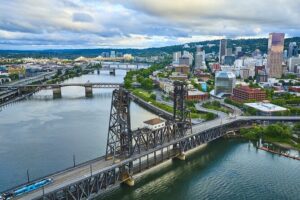
While Seattle's recovery has attracted considerable attention, Portland's tourism economy has quietly generated impressive results of its own.
Recent visitor research shows the Portland region generated approximately $5.5 billion in visitor spending while welcoming roughly 8.5 million person-trips. That level of economic activity would place tourism among the region's most significant industries.
Perhaps more telling is where that spending originated.
Overnight visitors staying in hotels, vacation rentals, and lodging properties accounted for approximately $2.4 billion in spending, reinforcing the important relationship between hotel demand and restaurant revenue.
Portland's tourism economy is unique because food itself serves as a major visitor attraction.
Unlike many destinations where restaurants simply support tourism, Portland's culinary scene actively drives visitation. Travelers increasingly visit Portland specifically for its independent restaurants, breweries, coffee culture, food carts, and neighborhood dining districts.
For destination leaders, this means restaurant success and tourism success are increasingly interconnected.
A memorable dining experience strengthens Portland's brand.
A disappointing one weakens it.
What Portland Restaurants Should Be Thinking About
Portland visitors rarely search for generic dining options.
They search for experiences.
The restaurants generating the strongest tourism demand tend to own a specific identity.
Visitors look for the city's best brunch, a memorable date night, a rooftop experience, a hidden neighborhood favorite, a chef-driven tasting menu, or a uniquely Portland dining experience.
In today's tourism economy, category ownership may be more valuable than broad awareness.
The question is no longer:
"Are visitors finding us?"
The better question is:
"When someone asks for the best version of what we do, are we part of the conversation?"
Central Oregon Continues Its Evolution Into a Year-Round Destination

Few destinations in the West have transformed as dramatically over the past decade as Central Oregon.
Once viewed primarily as a seasonal tourism market, communities such as Bend, Redmond, Sisters, and Sunriver now attract visitors throughout the year. Outdoor recreation remains the region's primary draw, but festivals, youth sports tournaments, conferences, golf travel, wellness tourism, and remote work have broadened demand considerably.
Recent lodging data illustrates both the opportunities and challenges facing the region.
Central Oregon hotels averaged approximately 42 percent occupancy during December 2025, while Bend itself approached 44 percent occupancy. On the surface, those figures may appear modest compared to larger urban markets.
Viewed differently, however, they tell a much more compelling story.
Even during one of the region's slower tourism periods, thousands of rooms remained occupied every night. Thousands of visitors continued arriving, checking into hotels, and looking for places to eat.
The tourism economy never truly shuts off.
It simply changes pace. Find Out What the Destination Management Organizations are Saying! Click Here!
What Central Oregon Restaurants Should Be Thinking About
Many restaurant operators focus their marketing efforts during peak season when visitor numbers are highest.
A more strategic opportunity may exist during shoulder seasons.
Summer visitors are abundant.
Shoulder-season visitors require more guidance.
Travelers arriving during quieter periods are often more willing to explore recommendations from hotels, visitor centers, tourism organizations, and local experts.
Restaurants that maintain visibility throughout the year often gain market share precisely when competitors pull back.
In destinations such as Bend and Sunriver, staying top-of-mind during slower months can create advantages that extend well into peak season.
Boise Has Become One of the West's Most Resilient Hospitality Markets
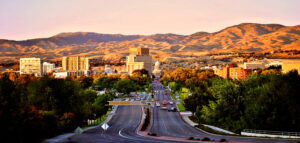
Boise's tourism story increasingly resembles an economic development story.
Historically viewed as a regional leisure destination, the Treasure Valley now benefits from a much broader mix of demand drivers, including technology investment, healthcare expansion, university activity, government travel, sporting events, and continued population growth.
One of the clearest indicators of that strength comes from Idaho's lodging tax collections.
Idaho Commerce reported lodging tax collections increased by more than five percent during fiscal year 2025. Because lodging taxes are generated from actual room sales rather than surveys or projections, they provide one of the clearest indicators of visitor demand.
For Boise-area restaurants, that growth suggests a steady stream of overnight visitors arriving for a variety of reasons.
Unlike many destinations that rely heavily on leisure tourism, Boise benefits from visitor diversification.
Business travelers, prospective residents, healthcare visitors, university-related travel, sporting events, and traditional leisure tourism all contribute to year-round demand.
That diversity creates stability.
What Boise Restaurants Should Be Thinking About
Today's Boise visitor is increasingly difficult to define.
The person sitting at your bar tonight may be a technology executive, a family attending a soccer tournament, a healthcare visitor, a state government employee, or a family exploring relocation opportunities.
Each arrives with different expectations.
The restaurants most likely to benefit from Boise's growth are those that clearly communicate who they serve and why they matter.
As Boise continues attracting investment and population growth, restaurants that position themselves as trusted local recommendations may benefit disproportionately from the city's expanding visitor economy.
Napa Valley Continues to Demonstrate the Power of High-Value Tourism

If Seattle illustrates the benefits of visitor volume, Napa Valley demonstrates the benefits of visitor value.
The region welcomes approximately 3.7 million visitors annually, a relatively modest figure compared to many major tourism destinations. Yet those visitors generate approximately $2.5 billion in annual spending, making Napa one of the most productive visitor economies in North America.
According to Visit Napa Valley, visitors spend an average of approximately $281 per day during their stay. Nearly 70 percent of all visitor spending comes from overnight guests.
Those numbers matter because they reveal a critical truth about modern tourism.
Not all visitors are equal.
Napa's success is built not on attracting the most visitors, but on attracting visitors willing to spend more on experiences.
Hotels, restaurants, wineries, spas, and luxury experiences all benefit from this higher-spending visitor profile.
As a result, hotel performance remains one of the most important indicators of restaurant opportunity throughout wine country.
What Napa Restaurants Should Be Thinking About
Napa visitors are not simply searching for dinner.
They are searching for stories.
The most successful restaurants in luxury destinations understand they are not competing solely on food quality. They are competing on memory creation.
Visitors increasingly seek experiences that feel local, authentic, and memorable enough to share with friends after returning home.
For restaurant operators, that means the dining experience begins long before guests arrive and continues long after they leave.
The businesses generating the strongest word-of-mouth recommendations are often the ones that understand this distinction best.
Find Out What the Destination Management Organizations are Saying! Click Here!
The Larger Trend Restaurants Cannot Afford to Ignore

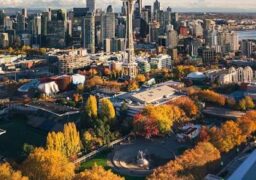
photo: Seattle Times
While each destination tells a different story, the broader trend remains remarkably consistent.
Across Seattle, Portland, Central Oregon, Boise, and Napa Valley:
- Hotels continue filling rooms.
- Business travel continues to recover.
- Visitor spending remains strong.
- Dining remains one of the largest categories of tourism spending.
For restaurants, this means tourism is no longer simply an opportunity.
It is a strategic revenue channel.
The businesses most likely to benefit are not necessarily the ones with the largest advertising budgets. They are the ones positioned where visitor decisions are being made.
Travelers continue to rely on trusted recommendations from hotel staff, concierge teams, visitor centers, tourism organizations, and local experts.
As consumers face increasing choice overload, those trusted recommendation channels may become even more influential.
The tourism economy is often measured in visitor counts.
The restaurant economy is measured in covers.
The connection between the two is visibility at the moment of decision.
As the Pacific Northwest moves further into 2026, that visibility may be one of the most valuable assets a restaurant can possess.
Find Out What the Destination Management Organizations are Saying! Click Here!
About the Where To Eat Guide
For more than 15 years, Where To Eat Guide has connected hungry travelers with local restaurants through a network of hotels, visitor centers, concierge teams, tourism organizations, convention facilities, airports, and digital dining platforms throughout Seattle, Portland, Central Oregon, Boise, Napa Valley, and beyond.
Because the only reason someone engages with Where To Eat Guide is to decide where to eat or drink, we call it:
Zero Lost Impressions™
Works Cited
"2025 Idaho Commerce Annual Report." Idaho Commerce, State of Idaho, 2026, commerce.idaho.gov/wp-content/uploads/2026/01/2025-Idaho-Commerce-Annual-Report.pdf
Downtown Seattle Association. "Seattle's Downtown Recovery Reaches Pre-Pandemic Heights." Downtown Seattle Association, Sept. 2025, downtownseattle.org/2025/09/the-registry-seattles-downtown-recovery-reaches-pre-pandemic-heights
Hotel-Online. "Napa Valley Lodging Industry Expected to Hold Steady in 2026." Hotel-Online, 2025, www.hotel-online.com
Travel Oregon. "Oregon Tourism Industry a Critical Economic Driver Despite Headwinds." Travel Oregon Industry, 2025, industry.traveloregon.com/newsroom/news/oregon-tourism-industry-a-critical-economic-driver-despite-headwinds
Travel Portland. "Market Research and Statistics." Travel Portland, 2025, www.travelportland.com/about-us/market-research-and-statistics
Travel Portland. Portland Regional Travel Impact Report. Travel Portland, 2025, www.travelportland.com/wp-content/uploads/2025/05/PDX_2024p_2025-03-24.pdf
U.S. Travel Association. "Travel Forecasts." U.S. Travel Association, 2025, www.ustravel.org/research/travel-forecasts
Visit Bend. "Research & Data." Visit Bend Industry Research, 2026, industry.visitbend.com/research-data
Visit Central Oregon. Research Update: December 2025 Review. Visit Central Oregon, 2026, visitcentraloregon.com/wp-content/uploads/2026/02/Visit-Central-Oregon-Research-Update-December-2025-Review.pdf
Visit Napa Valley. "Research." Visit Napa Valley, 2026, www.visitnapavalley.com/about-us/research