
The Visitor Economy: Who Captures the Dining Decision?
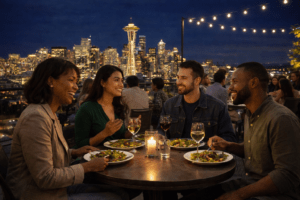 For restaurants, tourism is not an abstract economic indicator.
It shows up as a reservation at 7:30. A couple looking for dinner after checking into a hotel. A business traveler asking the front desk where to eat. A family scanning a QR code before deciding where to go next.
That is why the question “Is tourism back?” matters.
But for restaurants, there is a more useful question:
Are we converting visitor demand into restaurant revenue?
Travelers are already in market. They are already spending. And unlike local consumers, many are making multiple dining decisions each day without an established routine or a list of places they already know.
That creates a valuable window of opportunity.
The National Restaurant Association reports that 98% of domestic summer travelers planned to use a restaurant during their trip, making restaurants their most popular travel activity. It also estimates that, in a typical year, approximately $3 of every $10 spent at U.S. restaurants comes from travelers and visitors (National Restaurant Association, “Dining Is Leading”).
Tourism, then, is more than a lodging story.
It is a restaurant demand story.
The economic effect extends well beyond the dining room. U.S. Travel Association estimates that concerts, festivals, and professional sports alone generated $102 billion in economic impact in 2024 through spending at hotels, restaurants, and other local businesses (U.S. Travel Association).
For restaurants, the opportunity is not simply to be visible.
It is to be visible at the moment of decision.
That moment often sounds like this:
“Where should we eat?”
The restaurant that gets discovered, recommended, scanned, tapped, or reserved at that moment has a meaningful advantage.
A Changing Visitor Journey
The way travelers answer that question is changing.
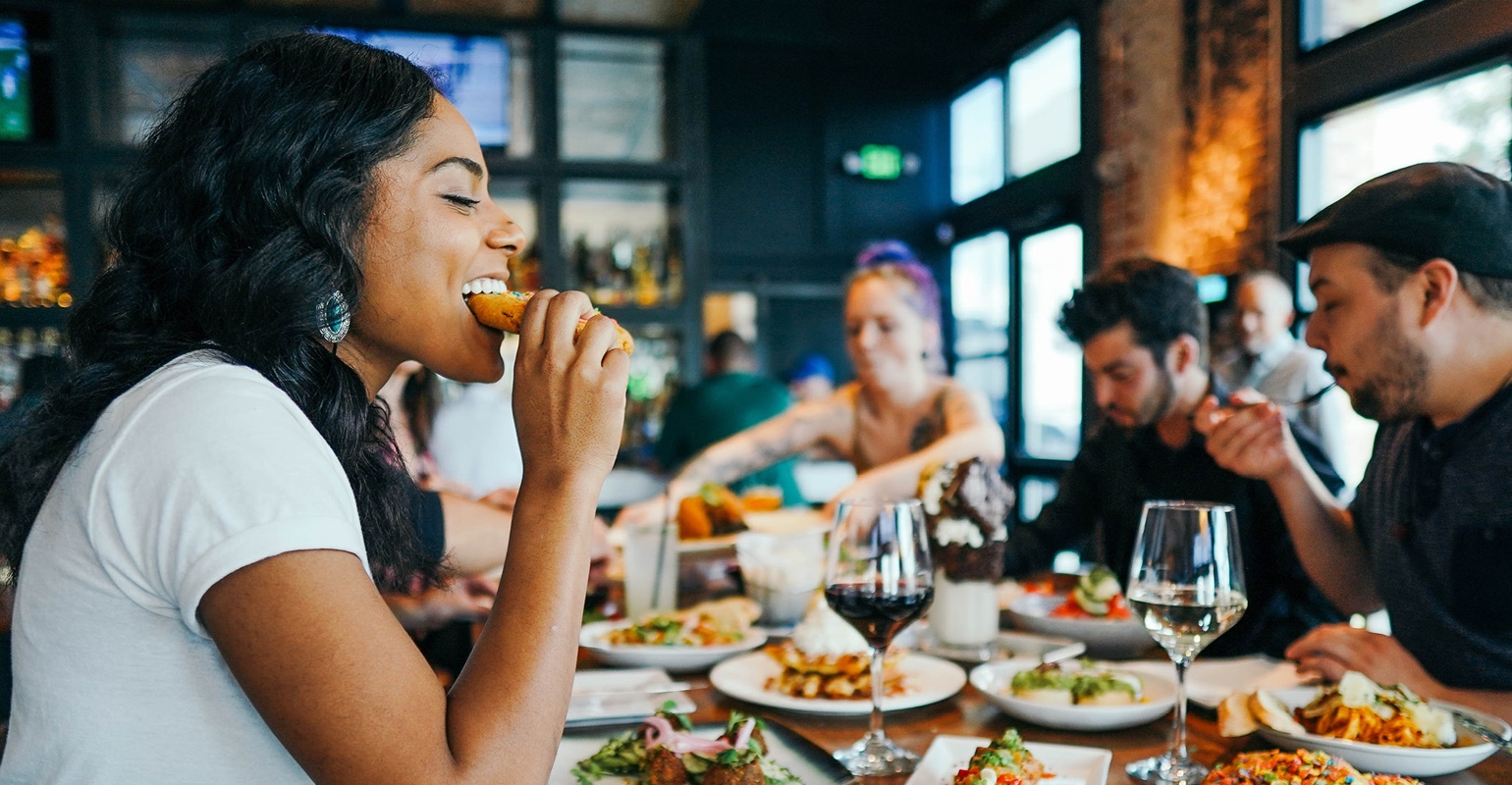
A recent stay at Cascada Thermal Springs in Portland offered a useful example. Throughout the experience, I noticed how naturally QR codes, mobile reservations, and tap-based interactions had become part of the guest journey.
What stood out was not the technology itself.
It was how little attention the technology required.
The guest sees an option, accesses information, makes a decision, and acts.
That pattern is increasingly familiar across hospitality:
Discovery → Information → Decision → Transaction
The time between those stages is shrinking.
Industry research supports that shift. An Oracle Hospitality and Skift study found that 73% of surveyed travelers wanted to use their mobile devices to manage parts of the hotel experience, including check-in, checkout, payments, and ordering food (Oracle).
Alex Alt, then senior vice president and general manager of Oracle Hospitality, described the change plainly:
“The industry is never going back” (Oracle).
More recent hotel data points in the same direction. A 2026 analysis of 7.4 million QR-code scans across 52 hotel and resort brands found that menu-related QR codes generated more scan activity than Wi-Fi access, loyalty enrollment, checkout, or guest feedback (Garg).
That finding is particularly relevant to restaurants.
Guests are not simply comfortable using the technology.
Food and dining are among the experiences they are actively using it to access.
Technology does not replace hospitality. In many ways, it makes trusted recommendations more valuable.
A front-desk agent can still influence a dining choice. A concierge can still introduce a visitor to a restaurant that person may never have found independently. A well-placed physical touchpoint can still create discovery.
Digital tools simply make the next step easier.
Scan. Tap. Reserve. Navigate. Go.
For restaurants, hotels, and destination organizations, the strategic issue is not whether technology will replace personal service.
It is how effectively the two can work together to turn visitor intent into local spending.

Why Dining Deserves More Attention
Travelers do not simply need food.
They actively seek dining experiences when they travel.
The National Restaurant Association’s 2026 research found that 88% of domestic summer travelers planned to visit a restaurant they had never tried before, while 79% planned to seek out restaurants known for the local foods and flavors of their destination. Another 87% said they rely on recommendations from family and friends when selecting an unfamiliar restaurant (National Restaurant Association, “Dining Is Leading”).
That is a useful distinction.
This is not simply demand for calories.
It is discovery demand.
National Restaurant Association Chief Economist Chad Moutray summarized the relationship this way:
“Restaurants are central to tourism.”
He also notes that approximately 30% of sales at a typical restaurant come from tourists, underscoring how important travelers can be to restaurant economics (National Restaurant Association, “Report: Summer Travel”).
The dependence is even greater in some segments. National Restaurant Association research indicates that travelers and visitors account for an average of 41% of fine-dining sales, and one in four fine-dining operators report that visitors generate at least 60% of annual sales (National Restaurant Association, “Softer Tourism Spending”).
For operators, that changes the question from:
“How do we reach more people?”
to:
“How do we become relevant to the traveler who is already prepared to spend?”
Market Intelligence
Jump To Portland - Seattle - Bend - Boise - Napa
Portland
Demand expectations have improved materially
Portland’s latest lodging forecast provides one of the clearest examples of why tourism recovery requires nuance.
Tourism Economics recently revised expected 2026 hotel demand growth from -0.1% to +2.1%. Occupancy is forecast to reach 61.8%, RevPAR is projected to increase 2.1%, and annual room revenue is expected to grow approximately 2.5% to $485.1 million (Tourism Economics 4).
The change is more meaningful than the 2.1% figure alone suggests. The previous forecast anticipated a virtually flat or slightly declining demand year. The August revision reflects stronger-than-expected momentum in the Portland lodging market (Cohen).
Tourism Economics also notes that Portland hotel demand grew 4.9% in the second quarter of 2026, with another 4.9% increase forecast for the third quarter. ADR is expected to return to modest positive growth after roughly two and a half years of contraction (Tourism Economics 4–5).
The market is not back to 2019 performance in every respect. That distinction matters.
The more useful conclusion is that the trajectory has improved materially.
For restaurants, stronger lodging demand means a larger population of people waking up in Portland without their normal dining routines and deciding where to eat.
The next challenge is making sure that spending reaches restaurants and neighborhoods throughout the city.
Bend
Strong visitor demand is generating measurable community revenue
Bend finished FY26 with $15,225,103 in visitor lodging tax collections, an increase of 4.4% from the previous fiscal year, according to Visit Bend’s industry update.
That marked the first time citywide lodging tax collections exceeded $15 million.
In July 2026, Bend hotels sold 88,770 room nights, a 4.2% year-over-year increase, while occupancy reached 83.4%.
Those numbers matter beyond hotel performance.
Visit Bend explains that transient lodging tax is one of the primary ways the destination measures tourism demand because it reflects both occupancy and room rates. The City of Bend also uses a substantial share of those lodging-tax collections to support its general fund, public safety, streets, and other services (Visit Bend, “FAQs”).
For restaurants, however, the opportunity is more immediate.
Every occupied hotel room represents people making decisions outside their normal routine:
- Where do we get coffee?
- Where should we have lunch?
- Where should we go tonight?
- What do the locals recommend?
Strong lodging demand creates restaurant demand.
The strategic question is how much of that demand local restaurants capture.
Seattle
Visitor volume has become a spending-distribution opportunity
Seattle offers another version of the same story.
Nearly 432,000 downtown hotel rooms were sold in July 2026, representing 108% of July 2019 demand. Downtown consumer spending totaled more than $821.6 million during the first six months of 2026, an increase of 6.89% year over year (Downtown Seattle Association).
Downtown Seattle also benefits from a combination of demand generators: cruise passengers, professional sports, conventions, arts and cultural events, the waterfront, and major live events.
The challenge is no longer simply getting people into the city.
It is determining what happens after they arrive.
Do visitors spend within a narrow tourism corridor?
Or do they discover restaurants, neighborhoods, nightlife, retail, and attractions throughout the destination?
For Seattle, the economic opportunity increasingly lies in distributing visitor spending more effectively.
Restaurants are central to that equation because they offer one of the most frequent opportunities for visitors to engage economically with a destination.
Napa Valley
Visitor value can matter more than visitor volume
Napa Valley offers a useful counterpoint to destinations focused primarily on visitor counts.
Visit Napa Valley’s most recent comprehensive visitor research reports 3.7 million annual visitors generating $2.5 billion in local spending.
Nearly 70% of that spending came from overnight hotel guests, and the average visitor spent approximately $281 per person, per day. Tourism also generated $107.5 million in local tax revenue (Visit Napa Valley).
Those numbers illustrate an important principle:
Not every visitor has the same economic value.
For a premium destination, the strategic objective is not necessarily to maximize headcount.
It is to increase the value of the visit.
- Another night.
- Another restaurant.
- Another town.
- Another local experience.
- Another purchase.
For Napa Valley restaurants, dining is not simply an amenity surrounding tourism.
It is part of the destination itself.
The restaurant therefore participates not only in hospitality spending, but in the larger reason someone chooses Napa Valley in the first place.
Boise
Nearly 1.5 million hotel stays create a substantial decision market
Visit Boise reports approximately 1.49 million overnight hotel stays in the Boise area, generating more than $224 million in lodging revenue.
The organization also cites approximately $2.43 billion in direct travel spending and 17,980 jobs supported by travel in the region (Visit Boise).
Those figures describe the size of Boise’s visitor economy.
For restaurants, however, the more interesting number may be the number of decisions contained within those stays.
Every overnight visitor must make choices outside the home.
- Breakfast.
- Coffee.
- Lunch.
- Dinner.
- Drinks.
- Entertainment.
- Shopping.
What neighborhood should we explore?
What do people here recommend?
That is why lodging demand should not be viewed in isolation.
It is the beginning of a broader sequence of local spending.
For Boise restaurants, the opportunity is participating more intentionally in that sequence.
From Tourism Demand to Restaurant Revenue
The five markets are different.
Portland is experiencing improving lodging momentum. Bend continues to demonstrate strong visitor demand. Seattle is managing substantial visitor concentration. Napa Valley illustrates the economic importance of high-value travel. Boise continues to grow as a regional destination.
But the restaurant opportunity is remarkably similar across all five.
Visitor demand does not automatically become restaurant revenue.
There is a conversion process between the two.
That process depends on visibility, trust, timing, convenience, and relevance.
A traveler can be ready to spend and still never discover a particular restaurant.
A hotel employee can make an excellent recommendation, but the guest still needs an easy way to act on it.
A destination can successfully attract thousands of visitors while individual local businesses remain disconnected from much of that demand.
The opportunity is to reduce that disconnect.
Where Where To Eat Guide Fits
Where To Eat Guide has focused on one specific visitor decision for more than 15 years:
Where should we eat?
The platform connects travelers with restaurants through hotel and tourism distribution, hospitality referral relationships, physical rack-card placement, and mobile dining discovery.
Restaurant placements can include photography, sample menus, maps, click-to-call functionality, directions, reservations, and ordering links.
WTEG’s current media materials describe a distribution network of more than 500 hotels and tourism locations, as well as relationships with more than 2,000 hotel guest-service professionals who regularly assist travelers with dining decisions (Where To Eat Guide).
The model is intentionally physical and digital.
A recommendation at a front desk can lead to a rack card.
A rack card can lead to a scan.
A scan can lead to a restaurant page.
A restaurant page can lead to a reservation.
That sequence matters because it happens when dining intent already exists.
Zero Lost Impressions
Most digital environments compete for attention.
A traveler can move from restaurant content to news, entertainment, shopping, social media, or hundreds of unrelated subjects within seconds.
Where To Eat Guide is intentionally narrower.
The person using the platform is there for one primary reason:
They are deciding where to eat or drink.
That distinction between broad exposure and specific intent is increasingly important as the digital marketplace becomes more crowded.
The Strategic Question
Tourism organizations work to attract visitors.
Hotels work to fill rooms and serve guests.
Restaurants work to generate profitable traffic.
Downtown organizations and economic-development agencies work to increase local spending.
Those objectives are not separate.
They are parts of the same economic system.
And that leads back to the question that started this discussion.
Is tourism back?
In some markets, the recovery is strong.
In others, the picture is more complicated.
But perhaps that is no longer the most useful question.
The better question is:
How effectively are we converting visitor demand into restaurant revenue and local economic activity?
Getting the traveler to the destination is a significant achievement.
What happens next determines how widely the economic benefit is shared.
That is where restaurants, hotels, technology, destination organizations, and hospitality professionals intersect.
And increasingly, that is where the next opportunity in the visitor economy lies.
Let’s Compare Notes
If your organization is thinking about restaurant demand, visitor spending, hospitality technology, hotel referrals, or how to keep more tourism dollars circulating locally, I would welcome the conversation.
-Jason Staats
AI & Editorial Transparency
Where To Eat Guide may use AI tools to assist with research, organization, brainstorming, editing, and early draft development. These tools are used to support the creative and editorial process, not replace human judgment, firsthand experience, or professional review.
All published content is reviewed, edited, and approved by a human author before publication. We strive to ensure our work reflects thoughtful analysis, accurate sourcing, and an appreciation for the diverse and multicultural communities that shape the hospitality and tourism industries.